7 Common Mistakes New Hikers Make on Day Trails
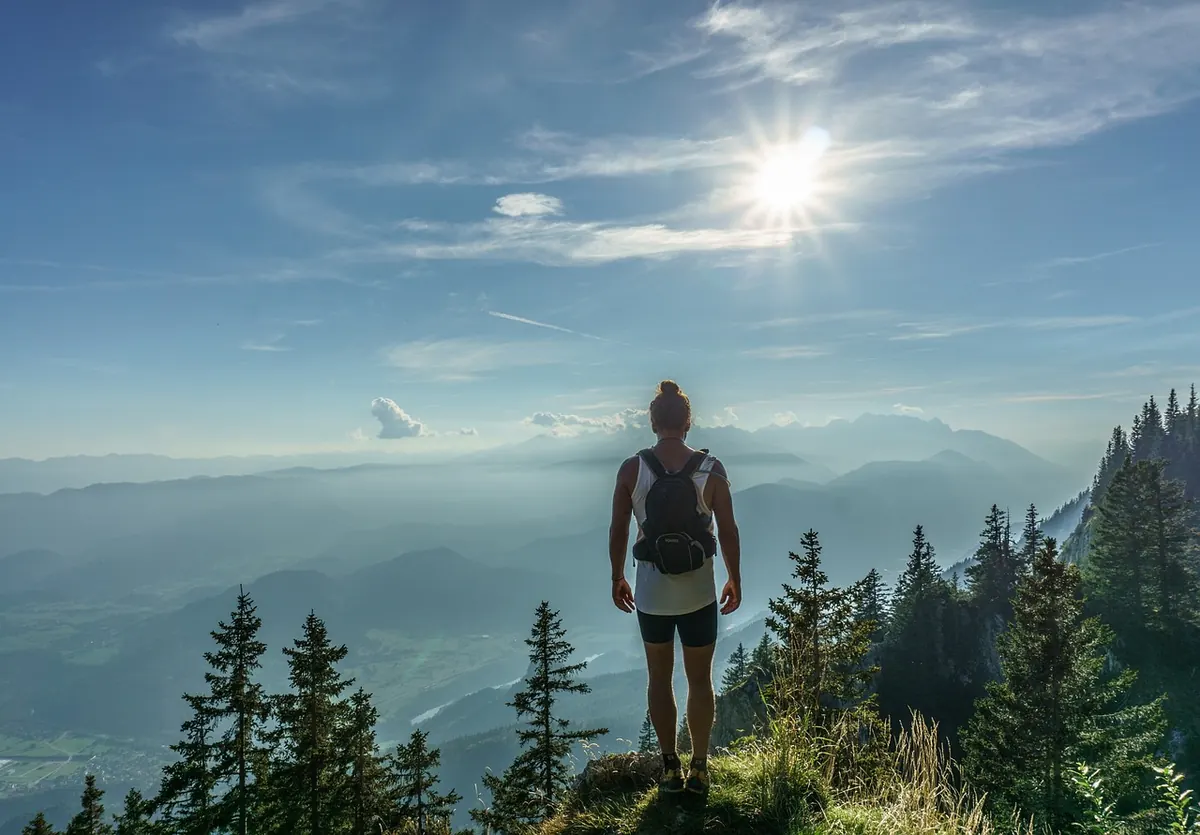
The trailhead parking lot on a Saturday morning is a study in optimism. Doors swing open, boots still creased from the box, one plastic water bottle, a phone at forty percent. Most of those hikers come back with a good story and a sunburn. A few come back late, cold, and out of water because of choices that looked small at the time. Nearly every one of those mistakes is free to fix. You just need to know which ones you're likely to make.
1. Packing for a summit push on a three-mile loop
New hikers swing to one of two extremes. Some bring a phone and a granola bar and call it done. Others fill a forty-liter pack with a stove they will never light. The useful question isn't "what might I need?" It's "what would I need if this afternoon went wrong?" That reframes everything. A rolled ankle on a rocky descent, a rain shower that soaks a cotton shirt, a wrong turn that adds an hour — those are the situations a small, deliberate kit handles.
For most day hikes in mild conditions, this is enough:
- Water, and more of it than the distance suggests
- An insulating layer and a light rain shell, even on a clear forecast
- A headlamp or small flashlight with working batteries
- Food with calories and salt — nuts, dried fruit, a sandwich you actually want
- Blister care, a few bandages, and any personal medication
- A paper map or downloaded offline map, plus a compass you can read
- Sun protection: hat, sunglasses, sunscreen
- A whistle and a compact emergency blanket, which are useless in the car
Weight adds up faster than you expect. A pack that feels fine in the driveway can feel heavy at mile four, so load it and walk around the block before you commit.
2. Blowing through the first mile
The most common physical mistake on a day trail is starting at the pace you'd walk on pavement. Trail surfaces are uneven, grades are steeper than they look, and every step costs more than it does on a sidewalk. Hikers who race the first mile usually spend the last two miserable.
Find a pace where you can hold a broken conversation. If you can't get through a sentence without gasping, slow down. After an hour of moving, sit for five minutes — actually sit — and eat something. Resting on schedule keeps you moving steadily; resting every twenty minutes because you're wrecked makes the day longer.
Adjust layers before you sweat through them. Shed a jacket at the first hint of heat and put it back on the moment you stop. Wet clothing chills you quickly once you're standing still.
3. Treating a phone as a navigation plan
A phone is a great map and a terrible plan. Batteries die in the cold, screens crack, and a blue dot is only as good as the signal behind it. Valley bottoms and canyon walls kill reception even on busy trails.
Before you leave, download the offline map for the area and screenshot the route and trailhead. On the trail, do two things consistently: look behind you, and check the map at every junction. Looking back matters because a trail walked uphill in one direction looks completely different coming down. Junctions matter because most wrong turns happen where a side path looks more worn than the official route.
If blazes, cairns, or signage vanish for more than a few minutes, stop and figure out why instead of pressing on. Trails change too — washouts, seasonal gates, closures. A quick check with the land manager or a ranger before you go answers most of it.
4. Ignoring the clock and the sunset
Set a turnaround time before you start, not when you notice the light going flat. Something like "we turn around at 2 p.m. whether or not we reach the lake." Write it on your hand if that helps. Sunset arrives earlier than the forecast suggests in a valley or under a canopy, and the last hour in fading light is when ankles roll.
Plan to be back at the car with an hour of daylight to spare, carry the headlamp regardless, and pace the day to the slowest person in the group. Nobody should be hiking alone to catch up.
5. Not drinking or eating enough
Thirst lags behind need: by the time you feel it, you're already behind. Drink steadily from the start rather than gulping at the viewpoint, and eat something small every hour or so. Salty snacks help replace what you lose through sweat.
Conditions vary, so carry more water than you think you need and turn back early if you're draining it faster than planned. Heat, altitude, sun exposure, and effort all raise the demand. If you have a medical condition, take medications that affect hydration, or you're hiking at altitude for the first time, ask a healthcare professional what's appropriate for you.
6. Borrowed boots and cotton socks
Borrowed boots, brand-new boots, and cotton socks are the three fastest routes to blisters. Footwear should be broken in and fitted with the socks you'll actually wear, with a little room in the toe box so your toes don't jam on descents. Trail runners are fine on most day trails if you're comfortable in them; heavy boots aren't automatically safer.
Pack a spare pair of socks and change them at the first hot spot. Treating a blister early takes two minutes. Treating it five miles from the car takes the rest of the day.
7. Leaving without telling anyone
The cheapest safety measure is also the most skipped: telling someone where you're going and when you'll be back. Not a vague "hiking Saturday" text. A specific one — trail name, trailhead, route, expected return, who's with you, and what your car looks like. Add what to do if you're not back within a couple of hours.
Do the same with weather. Check the forecast the night before and again in the morning, and be willing to cancel. A day hike is a hobby, not a commitment. Wind, lightning, ice, and flash-flood risk in canyons change the whole calculation, and the trail will still be there next weekend.
A five-minute routine that prevents most of this
None of these fixes is complicated. Together they take about five minutes at the car:
- Recheck the forecast and any trail closures.
- Say the turnaround time out loud.
- Download the offline map and confirm the trailhead.
- Fill water, pack the small essentials, and put the headlamp in even if it's sunny.
- Send your plan to someone who isn't on the hike.
- Start slower than feels natural, then settle in.
Run that routine a few times and it stops feeling like a checklist. The hikers who look relaxed out there usually aren't carrying less. They just made a few decisions in advance.
Photo: dreamypixel / Pixabay